
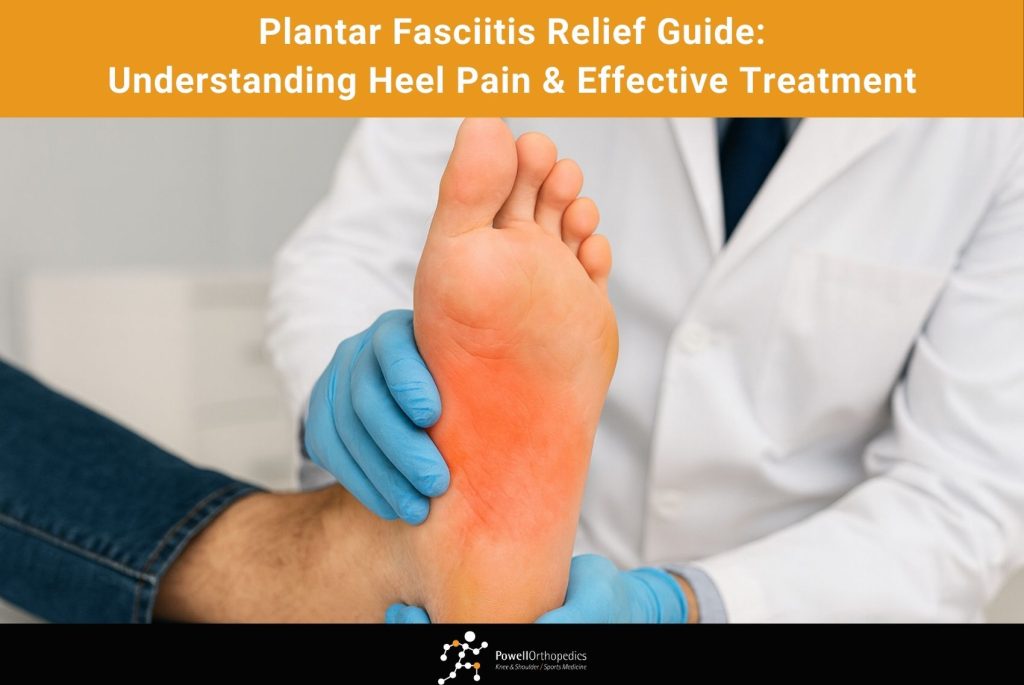
Understanding Plantar Fasciitis
Plantar fasciitis is one of the most common causes of heel pain among adults. The condition occurs when the plantar fascia — a strong, fibrous band of tissue that runs along the bottom of the foot — becomes irritated or inflamed.
This band of tissue:
- Connects the heel bone to the toes
- Supports the arch of the foot
- Helps absorb shock during standing and walking
When the plantar fascia is overstressed due to posture, repetitive strain, or changes in foot mechanics, tiny micro-tears can develop along the heel attachment point, leading to:
- Heel pain
- Stiffness
- Tenderness, especially with first steps in the morning
Plantar fasciitis can be painful and persistent, but with proper evaluation and treatment, most cases improve without surgery.
At Powell Orthopedics, our focus is to identify why the plantar fascia is irritated and implement a customized treatment plan that improves movement, relieves pain, and restores long-term foot and lower body function.
What Causes Plantar Fasciitis?
Plantar fasciitis usually develops from repetitive stress rather than a single injury.
Common Contributing Factors
| Risk Factor | How It Contributes |
| Flat feet or high arches | Alter how weight is distributed across the foot |
| Sudden change in activity level | Running farther, standing longer, resuming sports too quickly |
| Prolonged standing on hard surfaces | Common in teachers, nurses, warehouse and service workers |
| Tight calf muscles or Achilles tendon | Increases strain on the plantar fascia |
| Unsupportive footwear | Worn-out shoes reduce shock absorption |
| Excess body weight | Increases force placed on the heel with each step |
Some patients develop plantar fasciitis gradually; others notice pain after a specific period of heavy activity.
Symptoms of Plantar Fasciitis
Patients often describe a very characteristic pain pattern:
| Symptom | Description |
| Sharp heel pain when getting out of bed | First steps in the morning are often the worst |
| Heel pain after sitting or resting | Pain returns when standing again |
| Pain during prolonged standing or walking | Can worsen throughout the day |
| Tenderness along the bottom of the heel | Especially near the arch attachment point |
| Tightness in the calf or Achilles tendon | Often develops as a compensation pattern |
Pain may improve after “warming up” but return after prolonged use.
Why Early Treatment Matters
If left untreated, plantar fasciitis can lead to:
- Chronic heel pain
- Altered gait, which stresses knees, hips, and back
- Secondary tendon and joint irritation
- Development of heel spurs (bone changes due to persistent tension)
Early evaluation reduces risk of progressing into chronic pain.
How Plantar Fasciitis Is Diagnosed
Diagnosis is primarily clinical, meaning it is based on symptoms and physical examination.
Evaluation Includes:
- Palpation of the heel to identify tenderness
- Assessment of arch structure and foot alignment
- Evaluation of calf and Achilles tightness
- Gait (walking) and posture analysis
Imaging When Needed
| Imaging | Purpose |
| X-ray | Rule out fracture or bone spur significance |
| Ultrasound | Evaluate plantar fascia thickness and inflammation |
| MRI | Reserved for complicated or persistent cases |
Most plantar fasciitis does not require advanced imaging to confirm diagnosis.
Treatment Options at Powell Orthopedics
Treatment focuses on reducing irritation, improving foot mechanics, and strengthening supportive structures.
1. Activity & Footwear Modification
- Avoid walking barefoot on hard floors
- Replace worn-out shoes
- Use shoes with good arch support and cushioning
- Gradually return to exercise after improvement
Many patients see immediate benefit simply by adjusting footwear and daily strain patterns.
2. Stretching & Strengthening Exercises
This is one of the most important and effective parts of treatment.
Key Goals:
- Lengthen the calf and Achilles tendon
- Improve ankle flexibility
- Strengthen foot and arch support muscles
- Reduce stress across the plantar fascia
Therapy may include:
- Calf stretching routines
- Plantar fascia-specific stretches
- Foot intrinsic strengthening (small foot muscles)
- Balance and stability training for proper gait mechanics
Consistency matters more than intensity.
Daily work produces the best results.
3. Orthotics and Heel Support
Custom or off-the-shelf orthotics can:
- Support the arch
- Reduce strain on the plantar fascia
- Improve weight distribution
- Cushion heel impact forces
Soft gel heel cups may also provide short-term relief.
4. Medication (When Appropriate)
Anti-inflammatory medication may be used temporarily to calm irritation. It is not a cure but may help reduce discomfort enough to allow progression with therapy.
5. Cortisone Injection (Case-Based)
A cortisone injection may be considered in cases where:
- Pain limits daily function
- Therapy and orthotics are not providing sufficient relief
- Inflammation is significantly affecting tissue
Because cortisone weakens tissue if overused, injections are typically limited and used strategically.
6. Platelet-Rich Plasma (PRP)
PRP uses concentrated platelets from your own blood to support tissue healing in chronic or stubborn cases.
PRP may be recommended for:
- Chronic plantar fasciitis lasting 3+ months
- Patients who wish to avoid cortisone injections
- Individuals motivated to support natural healing
7. Night Splints
Worn during sleep to keep the foot gently flexed, reducing morning tightness and pain.
8. Physical Therapy
Most patients benefit from structured therapy to retrain gait, develop strong foot mechanics, and prevent recurrence.
When Surgery is Considered
Surgery is rarely required. It is typically only considered when:
- Pain has lasted 6–12+ months
- Conservative treatment has been followed fully and consistently
- The plantar fascia remains significantly thickened and restrictive
The goal is not removal, but release of the tight fascia — and only in carefully selected cases.
At Powell Orthopedics, we prioritize non-surgical care and use surgery sparingly.
When to Seek Care Immediately
Seek medical evaluation promptly if you experience:
- Sudden, sharp pain in the foot or calf during activity (possible tear)
- Rapid swelling or bruising in the heel or arch
- Numbness, tingling, or burning that spreads to the toes
- Difficulty bearing weight on the foot
- Foot deformity or visible change in arch height
These symptoms may indicate something more than plantar fasciitis and require timely evaluation.
Patient-Friendly Q&A
Will plantar fasciitis go away on its own?
Many cases improve with conservative care. However, ignoring symptoms can increase the risk of chronic pain.
Should I stop walking or exercising?
Modify — don’t eliminate — movement. Replace high-impact activities with low-impact options like cycling or swimming during recovery.
Do I need orthotics?
Most patients benefit from some type of arch support. Your provider will help determine the best type.
How long does recovery take?
Improvement often begins within weeks, but full recovery may take several months of consistent care.
Are heel spurs the cause of pain?
Not necessarily. Heel spurs are often a result of plantar fascia tension, not the primary cause of pain.
You Can Recover — and Stay Active
With the right treatment approach, most patients successfully:
- Reduce pain
- Improve movement confidence
- Return to normal activity
- Prevent future flare-ups
We support you through every step.
Schedule Your Evaluation
Powell Orthopedics
1450 East Zion Rd., Suites 6 & 10
Fayetteville, AR 72703
Phone: (479) 582-4647
Website: powellorthopedics.com
Request Appointment: https://powellorthopedics.com/appointments/